8th November 2026
Love Your Enemies: a Story for Remembrance Sunday
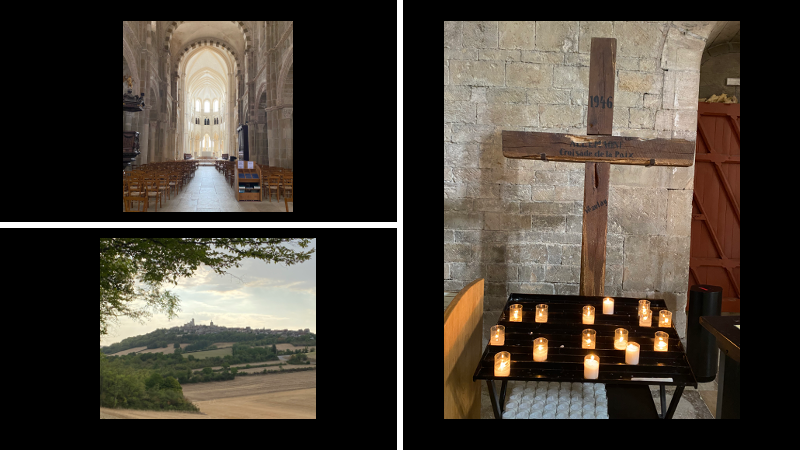
When I was on holiday in France this summer, we visited the historic medieval hill town of Vezelay. Around the edge of the medieval basilica, there are fifteen wooden crosses.
When France fell to the Nazi invasion in 1940, Vezelay was in the occupied zone, coming under direct German military administration. The war years for them would have been marked by scarcity of resources - it's said that the daily calorie intake of the average Frenchman fell from 2,400 per day to around 1,200. They lived under strict control. The Nazis moved the clocks forward by an hour to match with Berlin time. Newspapers and radio broadcasts were tightly controlled. Anyone with a spare room would be forced to provide accommodation for German officers. Jewish families faced escalating anti-Semitic persecution, and, from 1943, young Frenchmen were conscripted to work in German munitions factories and war plants. Any acts of resistance met with brutal punishment.
We can only imagine the collective and individual trauma - and the wounds that remained even after France's liberation and then the end of the war in 1945. In 1946, a Jesuit priest in Vezelay, Father Paul Doncoeur, launched a Crusade for Peace. He wanted to flip the problematic history of the medieval crusades on its head, transforming the call to holy war into a mass, unarmed pilgrimage for reconciliation and healing. Around 30,000 pilgrims carried fourteen large wooden crosses, representing various of the Allied nations. Then some German Prisoners of War, detained locally, heard about the Crusade for Peace and wanted to join in.
What would Father Paul do? How would he explain the presence of these German prisoners to 30,000 people who had suffered at the hands of the fascist regime? How easy would it have been to have told the Germans very politely that it was too soon, that the rest of the participants wouldn't be ready for it, that they should wait until the wounds of war had begun to heal? Father Paul did not take the easy route. He welcomed the German prisoners of war to participate in the march. They fashioned their own rough wooden cross out of two discarded beams and marched alongside their former enemies.
I wonder if there were mutterings and murmurings against Father Paul's decision? I wonder how many people felt hugely uncomfortable at the presence of "the enemy" in their midst? I wonder at the courage, firstly of the German prisoners to ask to join with a group of people to whom everything about them was likely to be unwelcome. I wonder at the courage of Father Paul to say yes and invite them in.
In the Sermon on the Mount, Jesus famously calls upon his disciples to love our enemies. That rough wooden cross in the basilica in Vezelay stands as a reminder both of the courage it takes to obey and of the impact of obedience.
To hear more of this story, come along to our service of Remembrance at Holy Trinity on Wednesday.
05/11/2026