30th August 2026
Summer Holiday Reads:
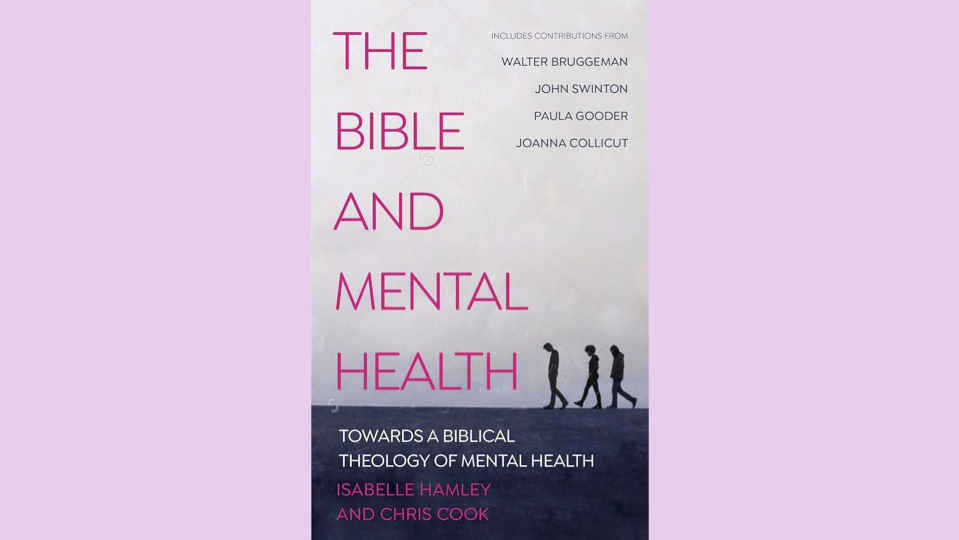
The Bible and Mental Health: Towards a Biblical Theology of Mental Health
- Isabelle Hamley & Christopher Cook (editors)
The Church has not been uniformly helpful in its teaching on mental health or in its dealing with people with mental health issues. On the one hand, there's the temptation to ignore or stigmatise them - because, after all, "the Bible doesn't mention mental health, does it," - and, on the other, to over-spiritualise them. Meanwhile, for many years, in counselling, psychiatry and other therapeutic contexts, practitioners were not allowed to bring faith into conversations, even when that faith played a central role in a patient's life. This sort of compartmentalisation of life - into the "faith" bits and the "non-faith" bits - would have been utterly foreign to the biblical authors. Faith and mental wellness or illness are inextricably intertwined. The Hebrew word "shalom" speaks of a state of well-being, of wholeness, completeness, peace with God and others. God promises shalom to a people disorientated by the horrors of invasion and exile.
The Bible doesn't talk about "mental health" using the language we use today, but that doesn't mean that there is no record of the experiences of people we would describe as suffering from mental health issues within its pages. The authors whose papers are gathered in this book describe the experiences of characters as diverse as Job, Jeremiah, Jesus, Paul, and the Gerasene Demoniac to reflect on how mental illness and mental flourishing is depicted through story. They also study the psalms of lament as the psalmists' honest reckoning with both God and their struggles. It reminded me once again that the characters in the Bible are not distant, historical heroes, nor cardboard cut-outs, but messy human beings whose good days and bad days, health and suffering, successes and struggles are not that different from my own. And that God, who made me, knows me inside out and loves me, sees all of this too and chooses to walk with me through it.
The final section of the book offers some practical applications for those in churches working with people with mental health difficulties. There is a helpful chapter on how to (and how not to!) use the Bible when caring pastorally for people, and another on reading scripture in community in a way that brings in rather than excludes those struggling with their mental health. There are also chapters on trauma and resilience. These chapters remind us that because suffering is an inescapable part of the human condition, as church we will be encountering people who are suffering. Whilst there are no easy answers, the Christian faith sees issues of mental health as being worked out in relationship - relationship with God, as we bring our laments, our anger, our questions - and relationship with one another as we seek to listen, love and include. It is, in fact, a kingdom issue.
This book could be read from cover to cover, or it would be possible to select different chapters and read them in isolation. It's not an easy book - either in the subject matter or in the arguments raised - but it is designed to be accessible for non-experts, as a resource for all of us as we keep on learning to welcome all with the love we have received from Jesus.

27/08/2026