28th June 2026
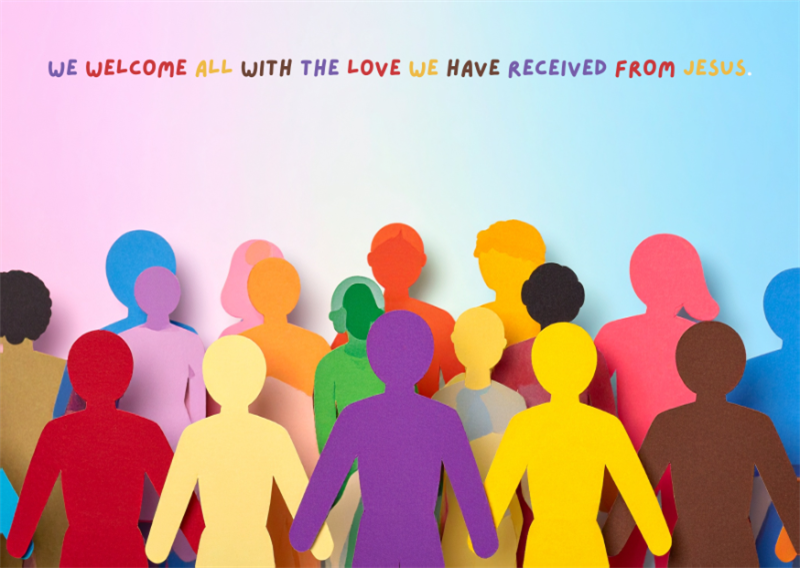 All
All
All are welcome... aren't they? (3)
Imitators of Christ
Many of the letters in the New Testament are written to young, growing churches grappling with the joys and challenges of what life together in Christ looks like. These churches have experienced the joy of hearing the good news of the gospel and encountering Jesus who loved them enough to die and rise again for them. They have experienced the outpouring of the Holy Spirit, bringing healing and new life among them. They have received the life Jesus offers with gratitude and hope.
These new churches are diverse communities, in which people who had never before acknowledged each other's existence find themselves worshipping together, praying together, eating together, doing life together. Gentiles and Jews, women and men, enslaved people and free people, poor and rich. Jesus, in his death on the cross, says Paul in Ephesians 2 verse 14, has "broken down the dividing wall, that is, the hostility between us."
This is joyful, heady, wonderful stuff. In these new communities, communities of people marked with the cross, the sign of the kingdom and filled with the Spirit to Iive the life of the kingdom, something new was going on. People who were considered worthless - slaves, women, the poor - were given a voice. The trouble comes when people who have not had a voice start using it to disturb the complacency of those who are used to having their voice heard. And disputes and disagreements begin to arise: how should we worship? who should lead / speak / pray? what foods are and are not acceptable?
The New Testament writers do two things as they address these challenges. First, they remind their readers about the wonderful truth of the gospel. In the light of Christ's death and resurrection and the outpouring of the Holy Spirit, change isn't just possible; it's the only option. A new culture is needed for a new kingdom. And so, second, they give instructions to their readers as to how to live in this new kingdom. And their answer, more or less, is this: to follow the example of Christ. In Ephesians 5, Paul goes on to say "be imitators of God, as beloved children, and live in love, as Christ loved us and gave himself up for us, a fragrant offering and sacrifice to God."
As HTSJ prepares to celebrate our fifth birthday we give thanks to God for our young, growing, diverse church community and for all the joy and energy that being part of such a community brings. We also recognise that living together as a growing, diverse community brings challenges. What might it mean for us as individuals, as groups within HTSJ, and as HTSJ facing the outside world, to "live in love"?
In Ephesians 5, Paul goes on to give some fairly specific instructions: such instructions are known in the New Testament as "household codes". I wonder what the HTSJ "household code" might be? In next week's column, I'm going to make some practical suggestions, but I'd love to hear from you too. How can we, as HTSJ, learn better "to live in love" over the next five years?

25/06/2026