31st May 2026
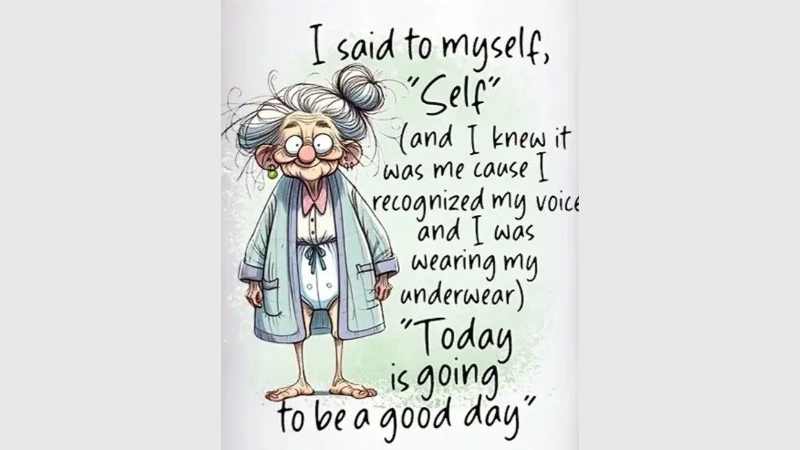
How are you?
My friend sent me this picture in a WhatsApp message this week - it made me laugh, so I thought I'd share it with you. May has been Mental Health Awareness Month, and my algorithm has been full of memes, adverts and advice designed to help me care for and improve my mental wellbeing. Of course, the problem is that we often can't simply put on our big girl pants and tell ourselves that today will be a good day - it's not that simple.
Mental health and mental ill health has risen in prominence in the national conversation over the past few years, and with good reason. The mental health charity Mind reports that one in four people in England will experience a mental health problem. In any given week, eight in a hundred people are experiencing anxiety, six in a hundred are suffering from PTSD, and four in a hundred from depression. If we consider that there are about 100 people in church on an average Sunday morning, we can expect that, at any given service, a proportion of us are living with some sort of mental health challenge.
During Mental Health Awareness Month, I've been reading a book edited by Christopher Cook and Isabelle Hamley called "The Bible and Mental Health". In it, biblical theologians grapple with the question of how we can use the Bible well in talking about mental health, in talking to people experiencing mental health difficulties and, most importantly, in listening to those people and receiving the unique gifts and perspectives they offer as part of our welcome as church.
The concept of "mental health" did not exist for the biblical writers - indeed, the Bible has no word for "health" as we use the term to indicate absence of disease. The closest vocabulary we have is probably the Hebrew word "Shalom". As members of our 8am congregation know well, Shalom means peace, but in its broadest sense - wholeness, completeness, security, well-being. However, it's important to note that these things are not the ultimate goal of shalom. Primarily, shalom is about relationship - being in right relationship with God first and then with others - and from these right relationships, everything else flows. Mental health in the Bible, then, might be considered a theological category. It's not something that we develop in our own strength or according to our personal desires, but a gift of God to human beings.
This could sound like a potentially very damaging interpretation of a person's mental health struggles. If we are living with mental health challenges, does this mean we are doing something wrong in our relationship with God? But shalom is not supposed to explain our mental health struggles, rather it points to the goal of mental health for the Christian - being in right relationship with God and others. That relationship is damaged in all sorts of ways by the brokenness of the world, by sin, by harm done to us deliberately or unconsciously... but God continues to hold out to us the goal, and the gift of shalom.
I'm writing this on Pentecost Sunday and reflecting on the word Jesus used to describe the Holy Spirit in John's Gospel - "Parakletos" - the Paraclete, Advocate, Comforter - the one called alongside. Pentecost reminds us that, whatever our ongoing struggles, we are not alone. The Holy Spirit, the one called alongside, walks with us and remains with us, even in the darkest of places. And, in a community of faith, we shouldn't be alone either: empowered by that same Holy Spirit, we are to be those called alongside one another for the struggles as well as the joys of life.

28/05/2026